
Choosing an electric vehicle (EV) charger is not simply a matter of matching a plug to a socket. The vehicle’s charging inlet, onboard charger, battery system, charging communication protocol, electrical supply and the charging station must all be compatible. This guide explains the main EV charging connector types, AC and DC charging ports, adapter limitations, vehicle-brand considerations and the basic single-line diagrams (SLDs) used when planning home or commercial EV charging in Pakistan.
Whether you drive a BYD, MG, Hyundai, Kia, BMW, Mercedes-Benz, Tesla, Nissan, Deepal, Changan, Honri or another electric vehicle, always verify the exact model, model year and market version before buying a charger or cable. A brand name alone does not identify the charging standard.

1. AC charging vs DC fast charging: what is the difference?
The first distinction to understand is whether the vehicle is receiving alternating current (AC) or direct current (DC). An EV battery stores energy as DC. With AC charging, the vehicle’s onboard charger converts the incoming AC supply into DC for the battery. With DC fast charging, conversion takes place in the external charging station and DC is delivered to the vehicle through a compatible DC charging inlet.
| Feature | AC charging | DC fast charging |
|---|---|---|
| Where conversion happens | Inside the vehicle’s onboard charger | Inside the external DC charging station |
| Typical use | Homes, offices, workplaces and longer parking periods | Public fast-charging locations, fleets and corridor charging |
| Common connector families | Type 1, Type 2 and GB/T AC | CCS1, CCS2, GB/T DC and CHAdeMO |
| What limits charging speed? | Vehicle onboard-charger rating, EVSE output and available supply | Vehicle battery/charging limits, station output, temperature and battery state of charge |
A charger advertised as 7 kW, 11 kW or 22 kW does not force that power into every vehicle. The actual AC charging rate is limited by the lowest applicable limit among the charger, the vehicle’s onboard charger and the electrical installation. DC charging is similarly controlled by the vehicle and the charging station. Battery temperature and the state of charge can also reduce charging speed.
2. EV charging connector types and ports explained
Several connector standards are used around the world. Some are designed for AC charging, some for DC fast charging, and some connector families support both through separate contact arrangements. The following overview helps identify the main types you may encounter in imported and locally sold EVs.
Type 1 (SAE J1772)
Type 1 is an AC charging connector historically used on many vehicles designed for North American and Japanese markets. It is generally associated with single-phase AC charging. A vehicle imported from another market may have a different inlet even if the model name is familiar, so inspect the actual vehicle inlet and its manual.
Type 2 (Mennekes / IEC 62196-2)
Type 2 is a widely used AC connector in Europe and many international markets. It supports single-phase and three-phase AC configurations, subject to the vehicle and supply. Type 2 is an important standard for EV charging infrastructure in Pakistan: the NEPRA Consumer Service Manual revised on 26 November 2025 specifies Type 2 for Level 2 charging infrastructure under IEC 62196.
CCS1 (Combined Charging System 1)
CCS1 combines an AC Type 1-style upper section with two additional large DC power contacts below. It is used for AC and DC charging through the combined vehicle inlet, with the DC station using the DC contacts for fast charging. It is associated mainly with North American-market vehicles and charging equipment.
CCS2 (Combined Charging System 2)
CCS2 combines the Type 2 AC interface with two additional DC contacts. It is widely used in Europe and many international EV markets. The NEPRA Consumer Service Manual revised in November 2025 specifies CCS2 for DC charging infrastructure under IEC 62196. For a public DC charging project in Pakistan, CCS2 should therefore be a central consideration, while any additional connector provision should be based on the intended vehicle market and applicable requirements.
GB/T AC and GB/T DC
GB/T is a family of Chinese national standards used by many vehicles designed for the Chinese domestic market. GB/T AC and GB/T DC are different connector arrangements; do not assume that an AC plug or cable can be used for DC charging. Many Chinese-brand vehicles are sold in more than one export specification, so check the actual inlet and the manufacturer’s documentation rather than assuming every vehicle from China uses the same port.
CHAdeMO
CHAdeMO is a DC fast-charging standard developed in Japan and used by some Japanese EV models, including certain versions of the Nissan LEAF and other vehicles. It has its own connector and communication requirements. The presence of a CHAdeMO port on a vehicle does not mean it can use a CCS charging cable directly.
NACS / SAE J3400
NACS, now standardized in North America as SAE J3400, is a compact connector family used by Tesla and adopted by other manufacturers for certain North American-market vehicles. It supports AC and DC charging through the same physical inlet, but compatibility still depends on the vehicle, charger, communication protocol, region and approved equipment. Do not assume that a Tesla or NACS vehicle in Pakistan has the same inlet as a North American-market vehicle.
| Connector | Charging type | Where it is commonly encountered | Important note |
|---|---|---|---|
| Type 1 | AC | North American/Japanese-market vehicles | Generally single-phase AC |
| Type 2 | AC | European and many international-market vehicles | Single- or three-phase depending on vehicle and supply |
| CCS1 | AC and DC via combined inlet | North American-market EVs | DC uses the two lower power contacts |
| CCS2 | AC and DC via combined inlet | European and many international-market EVs | Specified by NEPRA for DC charging infrastructure |
| GB/T AC | AC | Chinese domestic-market vehicles | Different from GB/T DC |
| GB/T DC | DC | Chinese domestic-market vehicles and compatible stations | Requires compatible DC communication |
| CHAdeMO | DC | Some Japanese-market EVs | Separate DC standard and protocol |
| NACS / J3400 | AC and DC | Tesla and some North American-market EVs | Regional and vehicle-specific compatibility applies |
3. Type 1 vs Type 2, and CCS1 vs CCS2
Type 1 and Type 2 are AC connector standards. CCS1 and CCS2 add DC power contacts to their respective AC connector designs. The difference is not simply the shape of the plug: pin layout, vehicle inlet, charging communication and the equipment on both sides must match.
For a buyer in Pakistan, the practical approach is to check the charging inlet on the vehicle, confirm the vehicle’s supported AC and DC standards in its manual, and then select a charger with a matching connector and protocol. If the vehicle is imported, ask the importer or manufacturer for the specification sheet for that exact market version.
4. EV charger adapters: what works and what to avoid
Searches for EV charger adapters often mix together several different products: connector adapters, charging cables, portable EVSE units, and simple domestic plug converters. These are not interchangeable. A connector that physically fits does not prove that the vehicle and charger can communicate safely or that the electrical ratings are suitable.
Before considering any adapter or conversion equipment, check all of the following:
- Vehicle make, model, model year and country/market specification.
- Vehicle inlet type and whether the required port is AC, DC or both.
- Charger connector type, output rating and supported communication protocol.
- Voltage, current, phase arrangement and frequency supported by the vehicle and charger.
- Manufacturer approval, product certification, temperature limits, locking and protective functions.
- Whether the adapter is permitted by the charger manufacturer and applicable local rules.
Important Pakistan safety note: Clause 16.7.7(i) of the NEPRA Consumer Service Manual revised on 26 November 2025 states that a portable socket-outlet or adaptor shall not be used for EV charging. The manual also includes requirements for compliant EV supply equipment, protection, earthing continuity and installation. Do not use an ordinary household plug converter, extension lead or improvised adapter as a substitute for a compliant EV charging point. For a public or commercial charging installation, design the equipment around the applicable requirements and approved connector standards.
Where a vehicle has an unusual or imported connector, ask the vehicle manufacturer or an authorized technical representative for the approved charging method. A qualified EV charging installer can then assess whether a compliant charger configuration is available. Never modify a DC connector or attempt to bridge different charging protocols with a passive cable.
5. Which EV charging port does each vehicle brand use?
There is no reliable one-port-per-brand rule. The same manufacturer can sell different connector specifications in China, Europe, Japan, North America and other export markets. Model year, trim, battery version and importer specification can also change the inlet. The following table is a checklist of brands to investigate in Pakistan, not a claim that every vehicle from that brand uses the same connector.
| Vehicle brand | Examples to verify | What the buyer/installer should confirm |
|---|---|---|
| BYD | Atto 3, Dolphin, Seal, Sealion and other imports | Chinese domestic or export-market inlet; AC and DC standards for the exact vehicle |
| MG | ZS EV, MG4 and other EV/PHEV models | Model year and market-specific AC/DC inlet |
| Hyundai | IONIQ and Kona Electric families | Regional connector specification and maximum AC/DC charging rates |
| Kia | EV6, EV9, Niro EV and other models | Market version, inlet and supported charging protocol |
| Tesla | Model 3, Model Y, Model S and Model X | North American NACS, European Type 2/CCS2 or another market specification |
| Nissan | LEAF and other electric models | Some versions use CHAdeMO; confirm AC inlet and model-year details |
| BMW | iX1, iX3, i4, i5, i7 and other models | Country specification and supported AC/DC connector |
| Mercedes-Benz | EQA, EQB, EQE, EQS and other models | Imported-market inlet and onboard-charger rating |
| Audi | Q4 e-tron, Q8 e-tron and e-tron GT families | Exact market version and DC charging compatibility |
| Porsche | Taycan and Macan Electric | Regional connector and vehicle charging limits |
| Deepal / Changan | Imported Deepal and Changan EV/PHEV models | Exact Chinese or export specification; AC and DC port standards |
| GWM / Haval | Ora and electrified models | Vehicle variant and local importer specification |
| Zeekr, Xpeng, Hongqi and JAC | Imported EV models | Confirm connector, protocol and charging limits from the vehicle documentation |
| Honri | Honri compact EV models, including the i300 | Confirm the exact vehicle inlet and onboard charging specification before selecting a 3.5 kW or other AC charger |
How to identify your port: check the owner’s manual and vehicle specification sheet, inspect the inlet cover and port shape, and ask the importer to confirm the charging standard in writing. A photograph of the inlet can help with an initial identification, but it cannot confirm the vehicle’s maximum charging power or communication compatibility.
6. EV charger power ratings: 3.5 kW, 7 kW, 11 kW, 22 kW and DC
Home and workplace AC chargers are commonly discussed by their nominal output rating. A 3.5 kW charger may suit a vehicle and property designed for a lower-power single-phase charging arrangement. A 7 kW unit is a common higher-power single-phase class. 11 kW and 22 kW AC charging generally require a suitable three-phase supply and a vehicle onboard charger capable of accepting that power. These are equipment classes, not guaranteed charging speeds for every car.
DC fast chargers are available in a range of power ratings, from lower-power units to high-output public charging equipment. The required rating depends on the target vehicles, expected daily energy, dwell time, site electrical capacity, transformer and distribution infrastructure, operating model and budget. A higher-rated charger does not make a vehicle charge faster than its own accepted power limit.
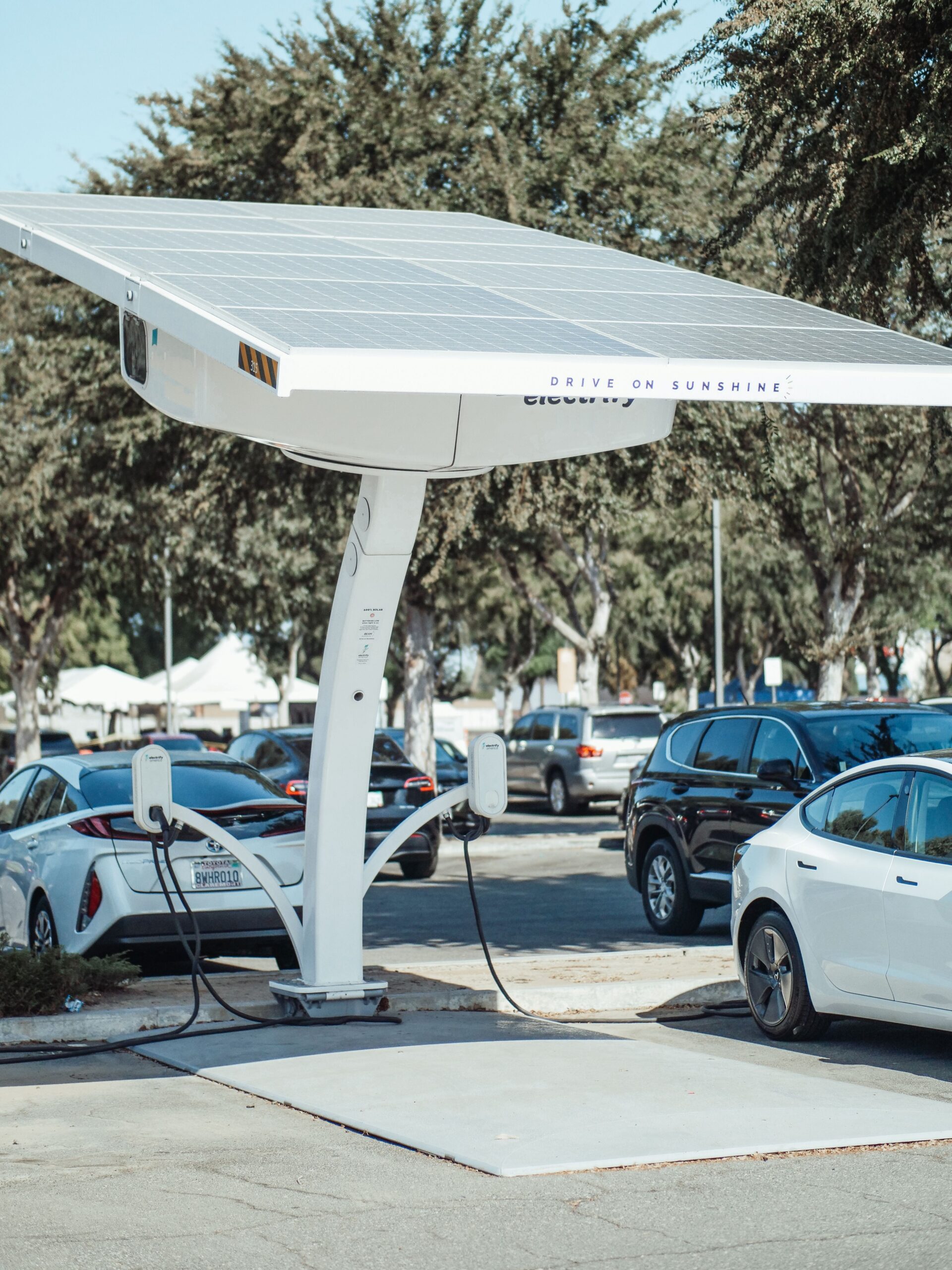
7. EV charger single-line diagrams (SLD): home AC and commercial DC
A single-line diagram is a simplified electrical drawing that shows the main supply path, switching and protective equipment, metering where required, charger and vehicle connection. It helps the designer, installer, client and inspecting authority understand how the charging installation is arranged. The diagrams below are conceptual planning examples only; they are not construction drawings or a substitute for calculations and a site survey.
Example A: dedicated home AC charger – conceptual SLD
UTILITY / APPROVED SUPPLY
          |
     MAIN METER
          |
      MAIN DB
          |
  DEDICATED EV FEEDER
          |
  ISOLATION / OVERCURRENT
  AND RESIDUAL-CURRENT
  PROTECTION AS DESIGNED
          |
  SURGE PROTECTION (AS REQUIRED)
          |
  AC EVSE / WALLBOX
          |
  MATCHING AC CONNECTOR
          |
       EV INLET
          |
   ONBOARD CHARGER
          |
      EV BATTERY

Protective earth / bonding:
Main earthing terminal -> EV circuit -> EVSE -> vehicle
(with earth-continuity monitoring and protective measures
as required by the applicable design and standards)
The final arrangement and device selection must follow the charger manufacturer’s instructions, applicable standards, the supply earthing system, fault levels and local requirements. Some EVSE products include residual-current or DC leakage detection; this must be checked before selecting upstream protection. Do not copy a generic breaker size, RCD type or cable size from an online diagram.
Example B: commercial DC fast-charging site – conceptual SLD
UTILITY / GRID CONNECTION
          |
  SERVICE METERING
          |
  MAIN LV SWITCHBOARD
          |
  MAIN PROTECTION / ISOLATION
          |
  TRANSFORMER (IF REQUIRED
  BY THE SITE SUPPLY DESIGN)
          |
  DEDICATED LV DISTRIBUTION
          |
  DC CHARGER INPUT PROTECTION
          |
  DC FAST-CHARGING POWER UNIT
          |
  CCS2 / OTHER APPROVED
  COMPATIBLE DC CONNECTOR
          |
       EV INLET
          |
       EV BATTERY

Separate design provisions:
Earthing and bonding | Emergency stop | Surge/lightning protection
Cable routing and mechanical protection | Ventilation/cooling
Metering and communications | Access control and signage
A commercial DC station may require a new utility connection, transformer, dedicated switchboard, civil works, ventilation, fire and emergency provisions, communications, metering and operating controls. The designer must calculate the maximum demand, diversity, fault protection, cable capacity, voltage drop, earthing and protection coordination. The final design must be reviewed and approved as required by the relevant utility and authorities.
8. EV charging installation safety and Pakistan requirements
EV charging equipment can operate for several hours at substantial current. A safe installation therefore needs more than a wall socket and a cable. The charging point, circuit, protective devices, earthing, enclosure, cable route and mounting location must be selected for the actual site and equipment.
- Dedicated circuit: provide a properly designed circuit for the EVSE rather than relying on an overloaded general-purpose outlet.
- Overcurrent and residual-current protection: select protective devices according to the EVSE design, built-in DC leakage detection and applicable standards.
- Earthing and bonding: verify the earthing arrangement and provide earth-continuity monitoring where required.
- Surge and lightning protection: assess the location and supply exposure and provide protection as required by the design.
- Outdoor installation: use equipment with an ingress-protection rating suitable for rain, dust, heat and the installation environment.
- Cable management: route and protect cables to avoid trip hazards, vehicle damage and accidental contact.
- Isolation and emergency procedures: provide suitable isolation and emergency arrangements for maintenance and operation.
- Inspection and maintenance: follow the equipment manufacturer’s maintenance instructions and applicable inspection requirements.
The NEPRA Consumer Service Manual revised on 26 November 2025 contains specific provisions for public EV charging stations, including connector requirements under IEC 62196, earth-continuity monitoring, protection and the prohibition on using portable socket-outlets or adaptors for EV charging. The NEECA Pakistan Electric Vehicles Charging Infrastructure and Battery Swapping Regulations 2024 also set out requirements for EV charging infrastructure and refer to connector families and applicable technical standards. Always check the latest official documents and the requirements of the relevant distribution company before proceeding.
Official references: NEPRA Consumer Service Manual (revised 26 November 2025) · NEECA EV Charging & Battery Swapping Regulations · IEC 61851-1 – EV conductive charging system, general requirements.
9. Can you combine EV charging with solar power?
Yes. A home, office, factory or commercial parking facility can be designed to use on-site solar generation to help supply EV charging. The system may use solar power directly when it is available, with the grid supporting the load when solar generation is insufficient. Battery storage may also be considered, but its power rating, energy capacity, inverter output and operating strategy must be designed around the EV charging demand and the property’s other loads.
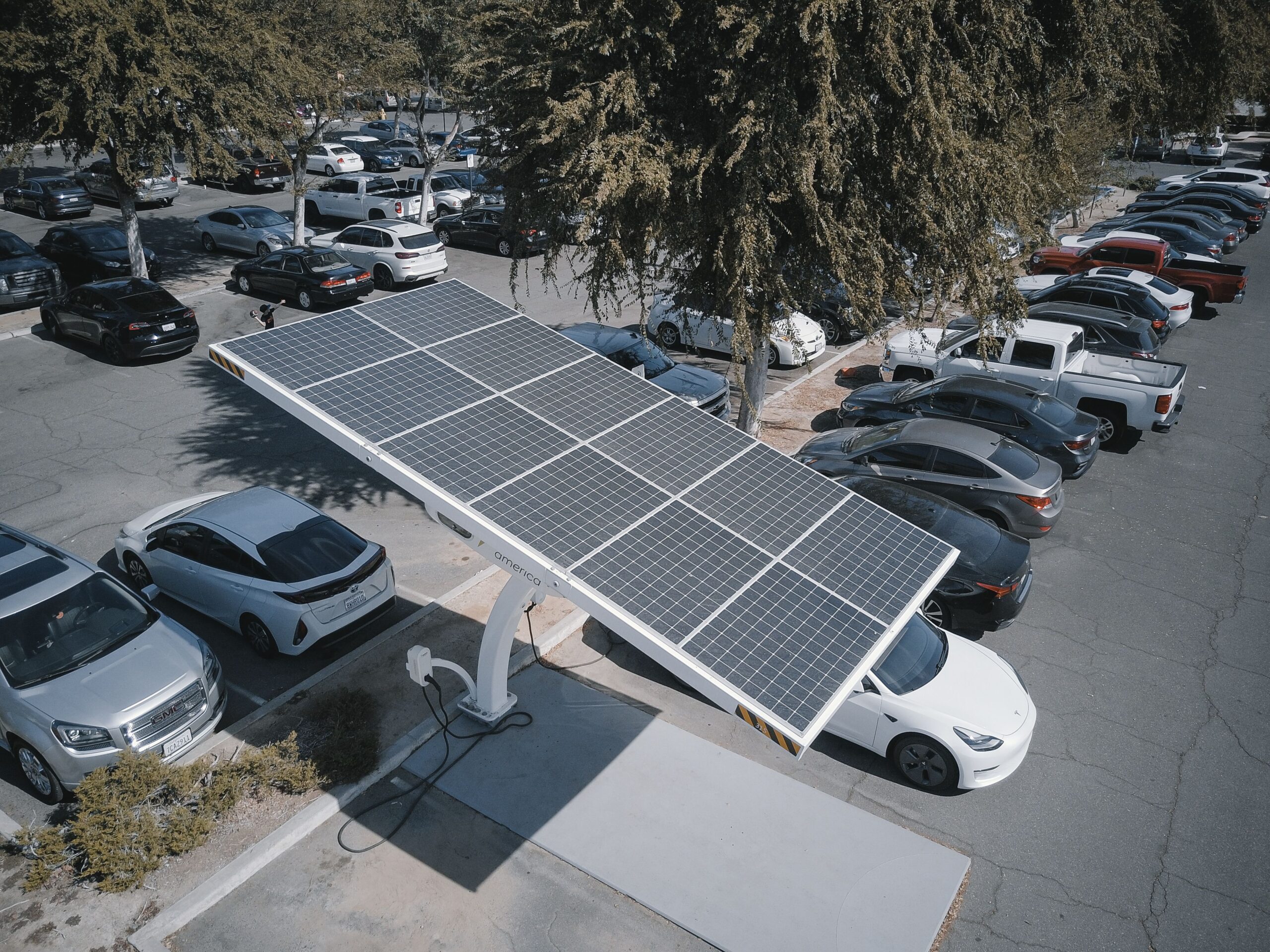
For a solar-integrated EV charging project, the engineering assessment should consider:
- Vehicle charging schedule and daily energy requirement.
- Solar PV capacity, expected generation profile and available roof or canopy area.
- Existing building load and the sanctioned utility connection.
- EVSE rating, load management and any demand-limiting controls.
- Battery storage requirements, if backup or time-shifting is needed.
- Grid import/export arrangements and utility approval requirements.
- Future provision for additional chargers or fleet vehicles.
10. How to choose the right EV charger in Pakistan
Before purchasing a charger, collect the vehicle and site information below. This will help an installer recommend equipment that is compatible and appropriate for the property.
- Vehicle brand, exact model, model year and import-market specification.
- A clear photograph of the charging inlet and the vehicle’s charging specification from the owner’s manual.
- Preferred charging location: home, office, apartment, fleet depot, hotel, retail site or public charging location.
- Available electrical supply: single-phase or three-phase, sanctioned load and distribution-board details.
- Desired charging power and typical parking duration.
- Approximate distance from the distribution board to the charger.
- Whether solar PV, battery storage or dynamic load management is required.
For a home charger, convenience, safe installation and compatibility are usually the main considerations. For a commercial charging station, the assessment should also cover expected utilisation, simultaneous charging, grid capacity, transformer requirements, metering, communications, payment or access control and future expansion.
Frequently asked questions about EV charger connectors and adapters
Which EV charging connector is used in Pakistan?
There are vehicles in Pakistan with different imported-market specifications. For charging infrastructure, the NEPRA Consumer Service Manual revised in November 2025 specifies Type 2 for Level 2 AC charging and CCS2 for DC charging under IEC 62196. Other connector types may be relevant to particular vehicles and should be assessed against applicable requirements.
Is Type 2 the same as CCS2?
No. Type 2 is an AC connector. CCS2 uses the Type 2-style upper section plus two additional DC power contacts, allowing a compatible vehicle inlet to support AC and DC charging.
Can a CCS2 charger charge a GB/T vehicle?
Do not assume so. CCS2 and GB/T DC use different connector and communication standards. Any proposed solution must be specifically approved for the vehicle and charging equipment and comply with applicable local requirements. A passive plug adapter is not a safe compatibility solution.
Can I use a Type 2 to Type 1 adapter?
Physical connector conversion does not guarantee safe operation or regulatory compliance. Check the vehicle and charger manufacturers’ instructions and local requirements. NEPRA’s revised Consumer Service Manual states that portable socket-outlets or adaptors shall not be used for EV charging at the covered charging infrastructure. Use compliant, manufacturer-approved charging equipment rather than improvised adapters.
Does every BYD, MG or Tesla have the same charging port?
No. Connector type can vary by model, model year and destination market. Confirm the exact vehicle specification and inlet before ordering a charger.
Can a 7 kW charger charge every electric car at 7 kW?
No. The vehicle’s onboard charger, the EVSE and the electrical supply all affect the actual AC charging rate. If the vehicle accepts less than 7 kW on AC, it will not charge at the full wallbox rating.
Can rooftop solar charge an EV?
Yes, if the solar and electrical systems are designed to supply the charging load. A control system may manage the charger output according to solar generation, building demand and grid availability. Battery storage is optional and depends on the required operating behaviour.
What information is needed for an EV charger installation quotation?
Share the vehicle make, model, year and charging-port details, installation address or area, available electrical supply, preferred charger power and photographs of the parking location and distribution board. A site assessment is needed to confirm the final design and quotation.
Plan your EV charger installation with Universal Solar
Universal Solar provides solar and EV charging solutions for residential, commercial and industrial customers. If you need a home wallbox, workplace charging, a commercial charging station or a solar-integrated EV charging solution, the first step is to confirm your vehicle compatibility and assess the site’s electrical capacity.
Explore our EV charger supply and installation solutions. For a quick assessment or quotation, send us your vehicle model, charging-port photograph and installation location directly on WhatsApp.
Technical note: This article is general educational information, not a vehicle-specific compatibility certificate, electrical design or installation instruction. Connector standards, vehicle specifications and regulations can change. Confirm the exact vehicle and equipment documentation and obtain a site-specific design from a qualified professional before installation.