
Electric vehicles are becoming a more visible part of Pakistan’s transport market. Buyers can now explore fully electric cars, plug-in hybrid SUVs, electric hatchbacks and premium electric vehicles from several manufacturers. As more people consider vehicles from BYD, MG, Haval and other brands, one practical question matters just as much as range and price: how will you charge the vehicle at home, at work or at a commercial location?
This guide explains EV charging in Pakistan, the main charger types, installation considerations, cost factors, solar integration and charging during load shedding. It also gives an overview of EV brands and models that buyers may encounter in Pakistan. Vehicle availability and specifications change, and imported variants can differ, so always confirm the exact model and market specification before selecting a charger.
Quick navigation
- EVs and plug-in hybrids available in Pakistan
- How home EV charger installation works
- AC vs DC EV chargers
- What affects installation cost in Karachi?
- BYD, MG, Haval and other EV charging compatibility
- Single-phase vs three-phase electricity
- Solar-powered EV charging
- Commercial EV charging stations
- EV charging during load shedding
- FAQs and how to request a site assessment
1. Electric vehicle brands in Pakistan: what should buyers know?
Pakistan’s EV market includes a changing mix of officially marketed vehicles, distributor-backed models and imported vehicles. The following brands and examples are useful starting points for charging discussions. This is an overview, not a guarantee that every model or trim is currently in stock or officially supported in every city.
Fully electric cars and SUVs (BEVs)
A battery electric vehicle (BEV) runs on an electric motor and a rechargeable traction battery. It is charged externally and does not use a petrol engine for propulsion. Buyers may encounter fully electric models from brands such as:
- BYD: Atto 2, Atto 3, Seal and Sealion 7, among other market or import variants.
- MG: electric models such as the MG4 EV, MG ZS EV and Binguo EV, subject to local availability and variant.
- Deepal: electric models such as the L07 and S07.
- Kia: EV models including the EV5 and other imported or distributor-listed variants.
- Hyundai: IONIQ electric models, including IONIQ 5 and IONIQ 6.
- Chery, OMODA and JAECOO: electric models and market-specific variants.
- GAC Aion and Hyptec: electric cars and SUVs appearing in Pakistan’s expanding EV market.
- XPENG, Zeekr and AVATR: premium electric vehicles available through selected market channels or imports.
- Seres, JMEV, Honri, Inverex, Alektra, GUGO, Forthing, Dongfeng, ORA, iCAUR, Riddara and other brands: availability varies by model, distributor and import channel.
The list will evolve as manufacturers introduce new models and dealers update their line-ups. Smaller electric vehicles, imported models and electric two-wheelers also form part of Pakistan’s wider EV market, but their charging equipment and electrical requirements are not necessarily the same as passenger cars.
Plug-in hybrids (PHEVs) and range-extended vehicles
A plug-in hybrid electric vehicle (PHEV) has a rechargeable battery and a petrol engine. It can be plugged in to charge its battery and may also use petrol when the battery’s electric range is used. Examples that buyers may encounter include selected MG HS PHEV, Haval H6 PHEV or H6 GT PHEV, and plug-in hybrid models from brands such as Chery, Jaecoo and OMODA. Exact availability and model specifications should be checked locally.
Some range-extended electric vehicles (REEVs or EREVs) also have a fuel-powered range extender. Their charging behaviour and electrical requirements can differ from a pure BEV. A conventional self-charging hybrid, by contrast, is not normally plugged into an external charger. Do not assume that every vehicle marketed as a hybrid needs a wallbox.
Important: identify the exact vehicle variant
A brand name alone is not enough to select a charger. Different model years, trims and imported variants can use different connectors, onboard AC charging limits and charging settings. Before buying a charger, confirm the vehicle’s exact variant, connector type and maximum AC charging rate from its owner’s manual or official manufacturer information.
2. Home EV charger installation in Pakistan
Home charging is convenient for drivers who have a dedicated parking space. A dedicated AC wallbox can provide a permanent charging point, while some vehicles may also be supplied with a portable charging unit. The right choice depends on the vehicle, daily travel, parking arrangement and available electrical capacity.
An installer should assess the incoming electricity supply, sanctioned or available load, distribution board, wiring condition, earthing, protection devices and cable route. The charger’s rated output must be matched to the vehicle’s onboard charger and the property’s supply. A higher-rated wallbox does not automatically make a vehicle charge faster.
3. AC vs DC EV chargers: which is right?
AC chargers supply alternating current to the vehicle, where the vehicle’s onboard charger converts it for battery charging. AC wallboxes are commonly considered for homes, offices and locations where vehicles remain parked for longer periods. Actual charging speed depends on the wallbox, vehicle onboard charger, supply and cable arrangement.
DC fast chargers convert power outside the vehicle and deliver DC power to the battery. They are generally used for public, fleet and commercial charging where shorter stops are important. DC installations are larger projects and require careful assessment of grid capacity, demand, equipment, civil works and site operations.
4. What affects EV charger installation cost in Karachi?
There is no single reliable installed price for every property. A quotation depends on the charger model and output, electrical supply, cable distance, protection equipment and any building or civil work. A site survey helps avoid comparing an equipment-only price with a complete installed solution.
- Charger make, model, rated output and smart features.
- Single-phase or three-phase supply and available electrical load.
- Cable length, route, conduit, trenching or wall penetrations.
- Dedicated circuit, breakers, residual-current protection and earthing.
- Distribution-board changes or electricity-supply upgrades, if required.
- Parking layout, outdoor protection, mounting and civil work.
- Testing, commissioning, configuration and warranty arrangements.
Ask each supplier to specify exactly what is included. Be cautious of fixed installation prices offered without checking the vehicle, electrical panel, cable route and charger rating.
5. EV charger compatibility: BYD, MG, Haval and other brands
Owners of BYD, MG, Haval, Deepal, Kia, Hyundai and other EVs should confirm the connector and charging limits for their exact vehicle variant. Imported vehicles may differ from locally marketed versions. The charger should be selected only after checking the vehicle documentation and the electrical installation.
For BEVs, the home AC charger must be compatible with the vehicle’s AC charging inlet and onboard charger. For PHEVs, check whether the particular model supports external AC charging and what input it accepts. A conventional hybrid that is not plug-in does not need a home EV charger.
When requesting a quotation, share the full vehicle model and year, a photo of the charging inlet if possible, and the relevant page from the owner’s manual. This is more reliable than choosing equipment based on the manufacturer badge alone.
6. Single-phase vs three-phase electricity for EV charging
A single-phase connection may be suitable for some home charging arrangements, while a three-phase connection can support other charging configurations where the vehicle and charger are designed for it. The available load, cable size, distribution board and utility connection all matter.
A qualified electrical professional should calculate the appropriate charging current and check what other major loads operate at the property. If capacity is limited, a lower charging setting or dynamic load management may help. A supply upgrade may be considered where feasible, subject to utility requirements and approvals.
7. Can solar panels charge an electric car in Pakistan?
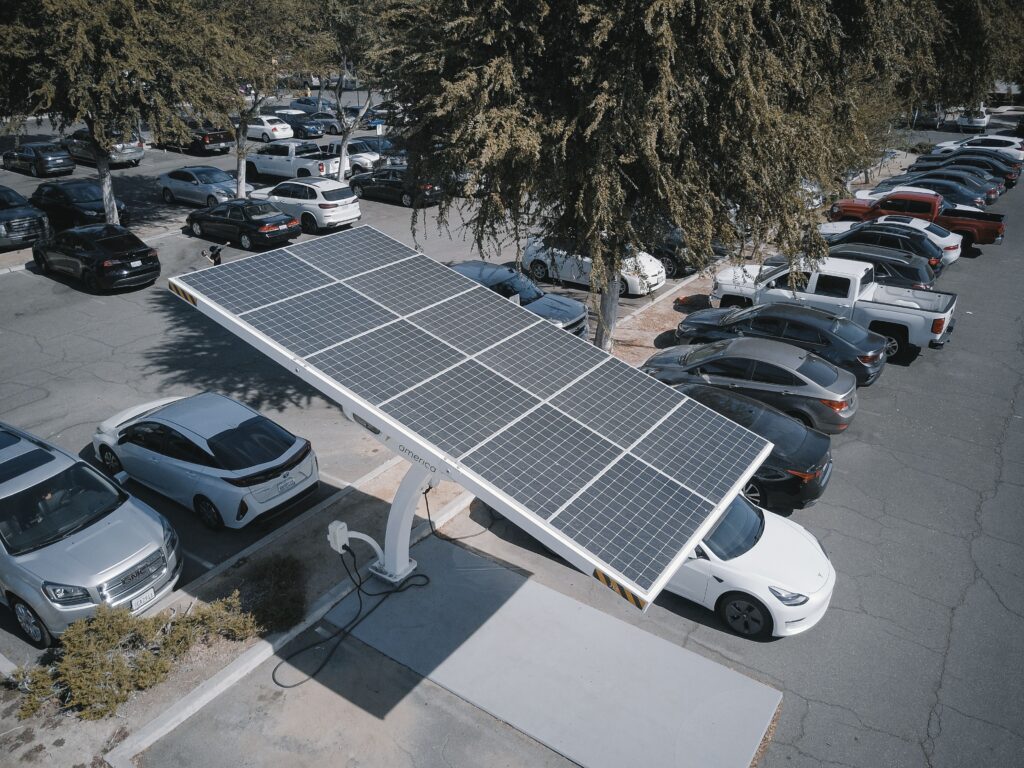
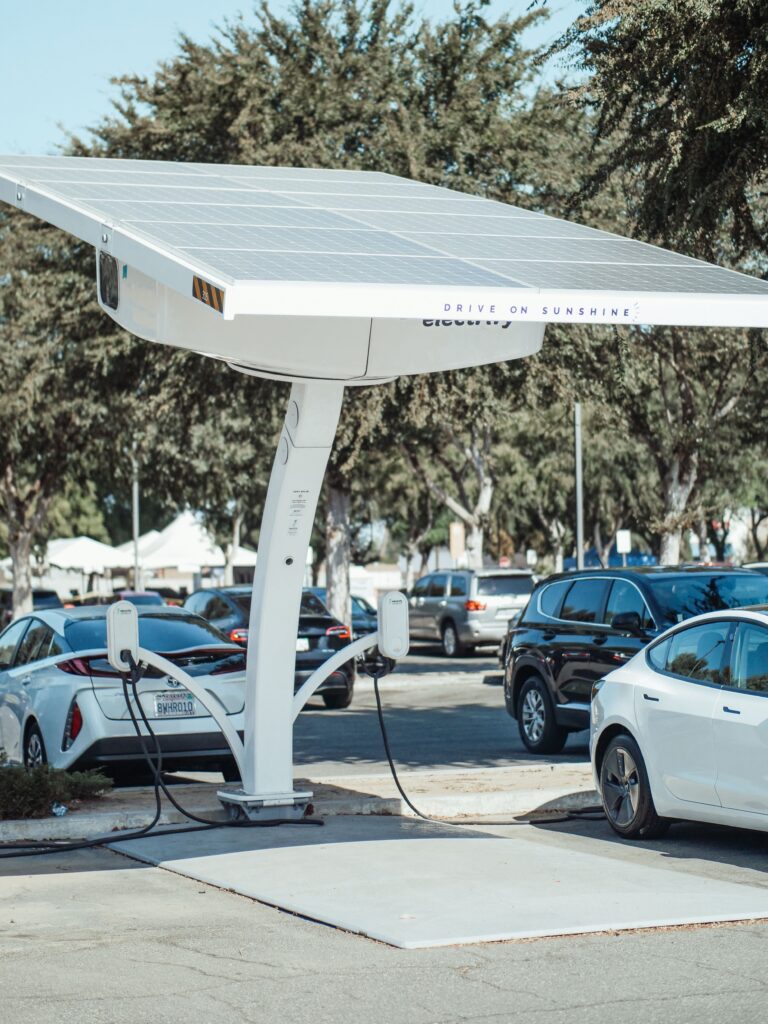
Yes. A solar PV system can contribute energy to EV charging when sunlight is available and the system is designed to support the load. Solar output changes with weather, season, shading and household consumption. Some charging arrangements can use surplus solar generation or scheduled charging; the available control features depend on the inverter and charger.
A solar-integrated EV charging assessment should review PV capacity, inverter output, household demand, charger power and any battery storage. Do not assume that a residential hybrid inverter or battery can support a high-power charger continuously. Backup output and battery discharge limits must be checked against the EV charger and all other loads.
For homes and businesses already using solar, coordinated charging can help use daytime generation more effectively. Whether this is practical depends on the vehicle’s charging behaviour, the solar system configuration and the owner’s daily parking schedule.
8. Planning a commercial EV charging station in Pakistan
Commercial charging projects need a different level of planning from a home wallbox. Potential sites include offices, shopping centres, hotels, housing developments, parking facilities, dealerships, fleets and highway-adjacent businesses. The project should begin with a realistic assessment of who will use the chargers and how long vehicles will remain parked.
- Estimate expected users, vehicle types, dwell time and charging demand.
- Assess grid connection, transformer capacity, sanctioned load and utility requirements.
- Select AC or DC charger types and output based on the use case.
- Plan parking bays, vehicle circulation, cable management, signage and accessibility.
- Include protection, earthing, communications, metering and payment requirements where applicable.
- Budget for civil works, installation, commissioning, maintenance and future expansion.
A phased approach may be appropriate: start with a demand assessment and electrical feasibility study, then plan charger quantities and expansion according to actual usage. Do not select DC fast-charging capacity before checking the site’s available power and commercial operating model.
9. EV charging during load shedding
A grid-connected EV charger will normally stop charging when the grid supply is unavailable unless a suitable backup system has been specifically designed to support it. EV charging is a substantial load. Before connecting a charger to an inverter or battery system, check continuous inverter output, battery discharge capability, backup circuit design, protection and other loads that need power.
Possible approaches include charging when grid supply is available, using a lower charging current where supported, or designing a suitable solar-plus-storage arrangement. A backup system should never be assumed to support EV charging simply because it can run lights, fans or other household appliances.
10. What should be included in a professional installation?
- Vehicle and charger compatibility check for the exact model and variant.
- Electrical load and distribution-board assessment.
- A documented cable route and installation method.
- Correctly selected circuit protection, earthing and residual-current protection.
- Weather and impact protection appropriate to the installation location.
- Testing, commissioning, user guidance and written warranty details.
11. Frequently asked questions
Can I install an EV charger at home in Karachi?
In many properties, yes, subject to the electrical supply, parking location, building permissions where relevant and a safe installation design. A site assessment is the best way to confirm feasibility.
Do all BYD, MG and Haval vehicles use the same charger?
No. Connector type and charging capability can vary by model, year, trim and import market. Confirm the exact vehicle specification before selecting a charger. Also distinguish a plug-in hybrid from a conventional hybrid.
Do I need three-phase electricity?
Not necessarily. The appropriate supply depends on the vehicle’s onboard charger, wallbox rating and available property load.
Can I charge an EV directly from rooftop solar?
Solar energy can contribute to charging when generation is available. The system must be designed to manage the EV load alongside other property demand.
Can my solar battery charge the car during load shedding?
Only if the inverter, battery, backup wiring and protection are specifically capable of supporting the charger load. Many residential backup systems are not designed for this.
How much does a home EV charger installation cost?
The final cost depends on equipment, electrical capacity, cable distance, protection devices and civil work. A site assessment is needed for a reliable installed quotation.
Arrange an EV charger site assessment with Universal Solar
Universal Solar helps residential and commercial customers plan EV charging installations, including home charging, commercial charging and solar-integrated solutions. Explore our EV charger installation services in Pakistan page to learn more about the services available.
WhatsApp Universal Solar for an EV charging site assessment. Share your vehicle make, model and year, your area, the type of property and a few photographs of the parking space and electrical distribution board if available. We can use these details to understand your requirements and discuss the next assessment step.
Note: EV models, local availability, connector standards and manufacturer specifications can change. This article is general guidance, not a substitute for the owner’s manual, utility approval or a site-specific electrical design.