
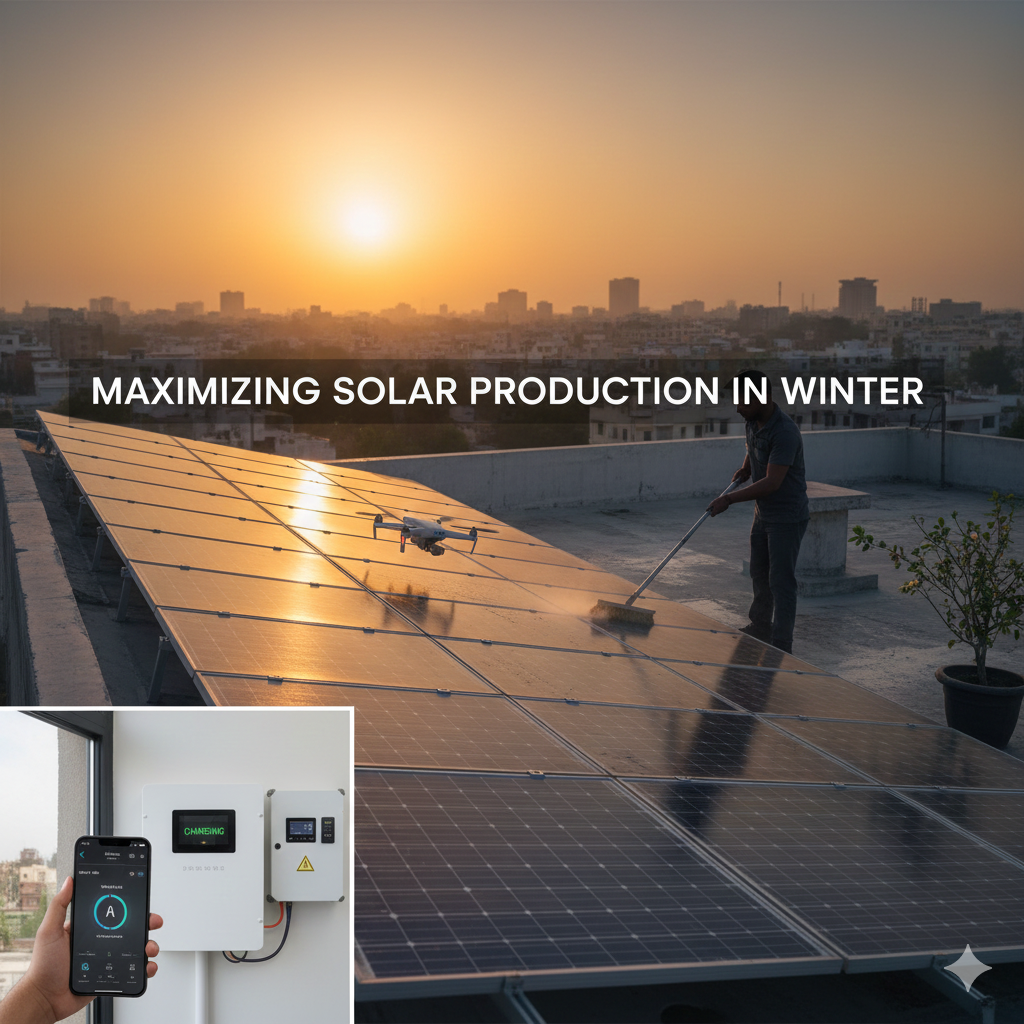
Harness the Sun’s Power, Year-Round!
Solar Production In Winter Karachi: While Karachi might not see snow, winter still brings changes that can impact your solar energy system. Shorter daylight hours, a lower sun angle, and even increased dust or haze can subtly reduce your photovoltaic (PV) output. But with a few smart strategies, you can ensure your solar panels continue to perform optimally and keep your energy bills low, even during the cooler months.
This comprehensive guide will help you maximize your solar production in winter right here in Karachi.
1. Optimize Panel Tilt & Orientation: Catch Every Ray of Winter Sun
The sun’s path across the sky shifts noticeably in winter, becoming lower and traveling across a shorter arc. This means your summer panel angle might not be the most efficient for capturing maximum sunlight.
Why it Matters: A slightly adjusted panel tilt helps your modules face the lower winter sun more directly, capturing more of the available solar radiation throughout the day.
Your Action Plan:
- Adjust Your Tilt Angle: If your system has adjustable mounts (like ground-mounted systems or some commercial installations), consider a slight increase in the tilt angle. While snow isn’t an issue, a steeper angle can help catch more of the low winter sun.
- Confirm True South Orientation: Ensure your panels are perfectly aligned towards true south. Even slight deviations can reduce efficiency, especially when daylight hours are already shorter.
- Perform a Winter Shade Audit: The lower winter sun can cast longer shadows from nearby buildings, water tanks, trees, or other obstructions that might not have been an issue in summer. Identify and address any new sources of shade, as even partial shading can significantly reduce your entire array’s output.
2. Keep Panels Spotless: The Power of a Clean Surface
Dust, grime, and environmental pollutants are a constant challenge in urban environments like Karachi. During winter, calmer winds can sometimes lead to more settled dust, and morning dew can combine with it to form a stubborn film.
Why it Matters: Any accumulation on the panel surface prevents sunlight from reaching the photovoltaic cells, directly reducing energy generation. A clean panel means direct sunlight and maximum energy production.
Your Action Plan:
- Regular Cleaning Schedule: Implement a more frequent cleaning schedule during winter. While rain helps in other seasons, you’ll need to manually clean panels of accumulated dust, dirt, grime, and bird droppings. These can significantly reduce efficiency, even on a sunny day.
- Safe Cleaning Methods: Use clean water and a non-abrasive sponge or soft cloth. Avoid harsh chemicals or abrasive tools that could scratch the glass surface of your panels. Early morning or late afternoon cleaning is best to avoid rapid drying in direct sunlight.
3. Optimize Energy Storage & Management: Make Every Watt Count
With fewer daylight hours, intelligent energy usage and storage become even more crucial to maintain your electricity supply.
Why it Matters: You’re producing less energy from the sun, so it’s vital to store what you can and use your power efficiently.
Your Action Plan:
- Embrace Battery Storage: If you don’t already have one, consider a solar battery storage system. This allows you to store excess energy generated during the limited daylight hours and use it during the longer evenings or on overcast days, enhancing your energy independence and reducing reliance on the grid.
- Strategic Energy Consumption: Shift high-energy tasks (like running water pumps, washing machines, or charging EVs) to the middle of the day, when your panels are producing their peak power. This directly utilizes the solar energy as it’s generated.
4. System Maintenance & Monitoring: The Silent Guardians of Efficiency
Regular checks and smart monitoring ensure your system is always performing at its best, especially when every bit of sunlight counts.
Why it Matters: Proactive maintenance prevents small issues from becoming major problems that reduce your winter output, ensuring consistent performance.
Your Action Plan:
- Professional Inspection: Schedule an annual professional inspection. A technician can check for loose wiring, inverter issues, or any damage that could impair performance.
- Monitor Your Production: Regularly check your solar monitoring app or system dashboard. Familiarize yourself with your typical winter production levels. A sudden, unexplained drop might indicate an issue needing attention (e.g., unexpected shading, a dirty panel, or a system fault).
- Check for Critters: Animals sometimes chew through wires or nest under panels. Ensure your system is secure.
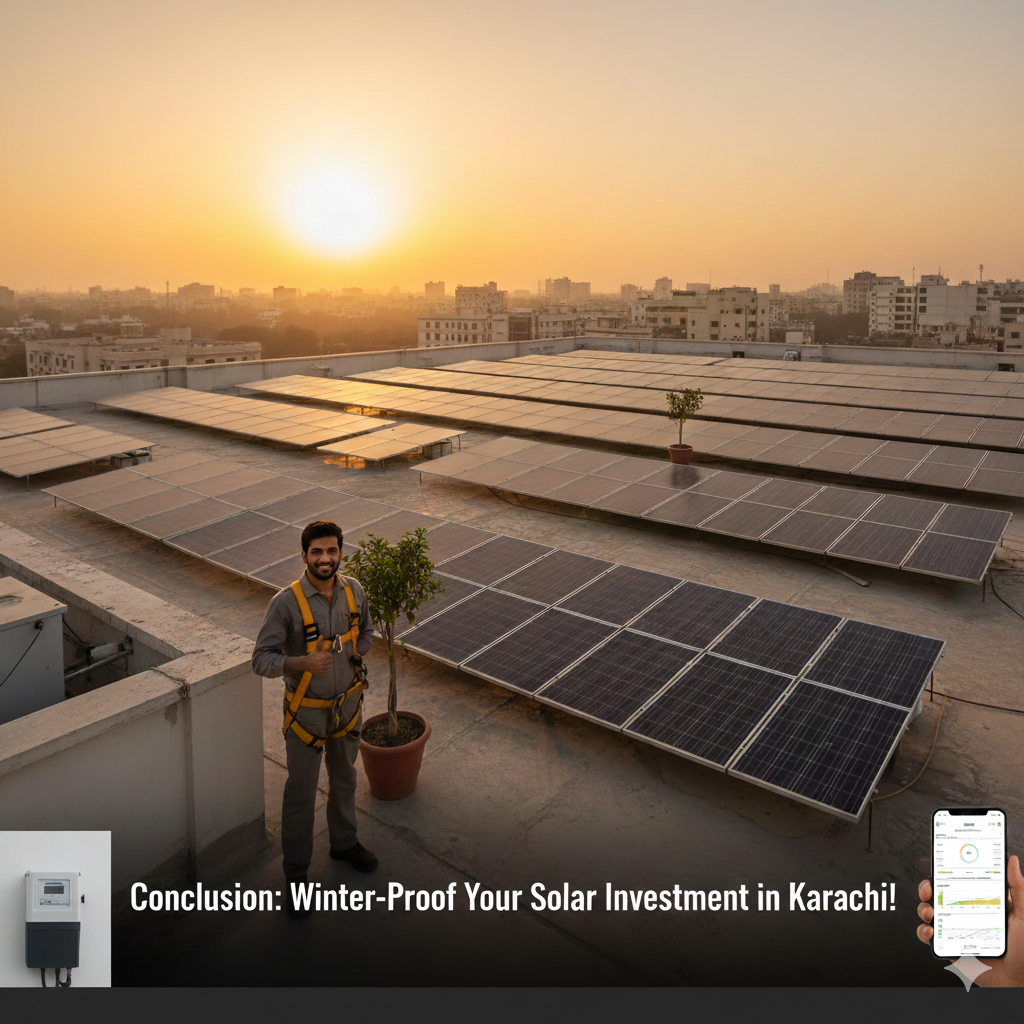
Conclusion: Winter-Proof Your Solar Investment in Karachi!
Don’t let the cooler, shorter winter days diminish your solar energy benefits. By implementing these strategies for maximizing solar production in winter in Karachi, you can ensure your PV system continues to deliver clean, renewable energy and significant savings throughout the season. Embrace smart management, diligent maintenance, and optimal positioning to turn those winter days into productive power-generating opportunities!
Ready to boost your winter solar output? Share your tips in the comments below!
RELATED: HOW MUCH DOES A SOLAR SYSTEM COST IN PAKISTAN
AND: SOLAR PAKISTAN 2025
Great information shared.. really enjoyed reading this post thank you author for sharing this post .. appreciated
I do not even understand how I ended up here, but I assumed this publish used to be great
Awesome! Its genuinely remarkable post, I have got much clear idea regarding from this post
Thanks! This was very helpful and informative.